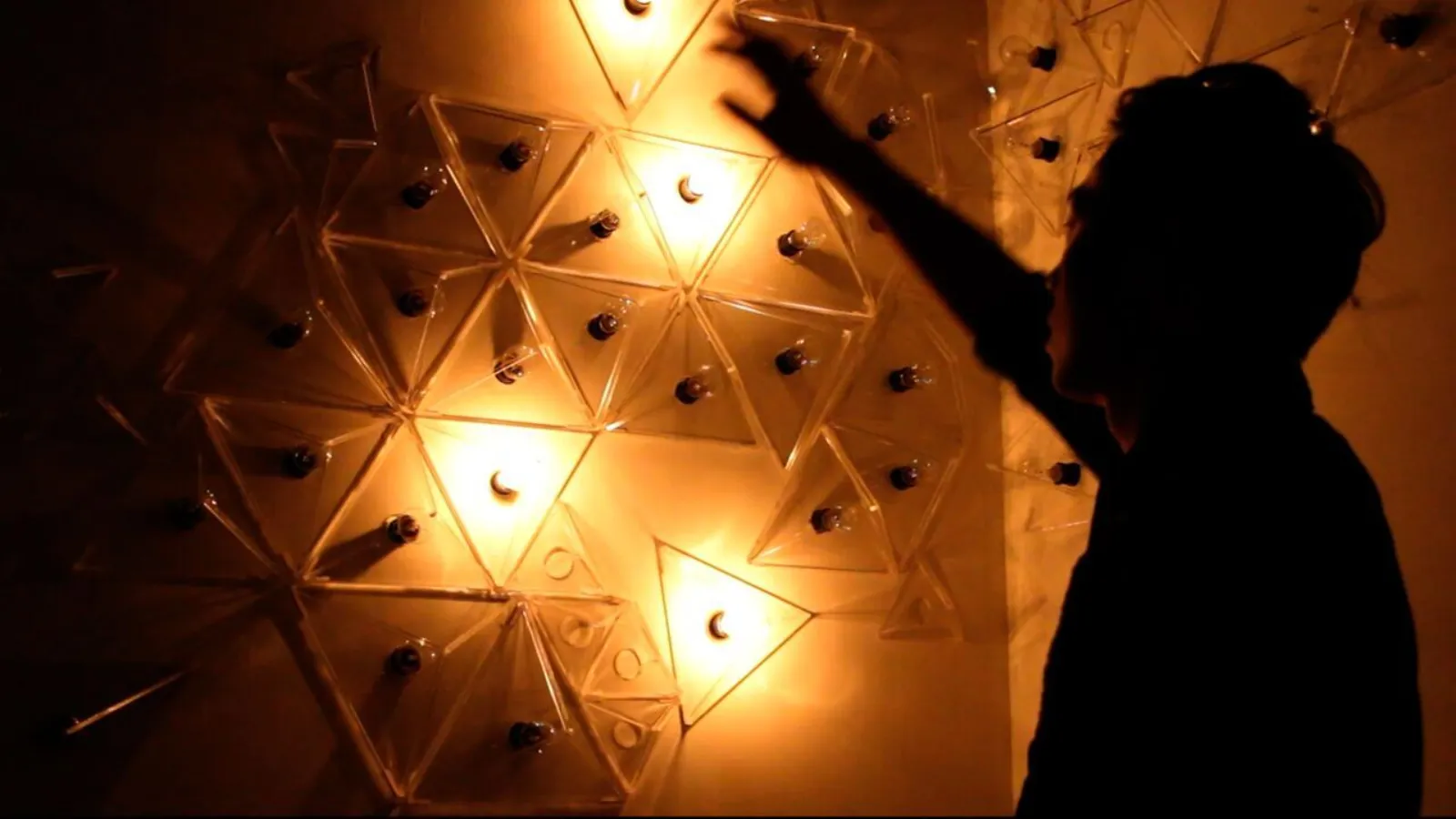
Law of Light II
光律 II
2014–
Medium
Tungsten wire, light sensors, custom software, network data, Arduino
Dimensions
4m × 4m × 4m (H)
Category
Collaborators
Ssu-Ying Hsiao, Yen-Hsiang Chao, Ting-Zhen Wu, Cha-Yi Chen
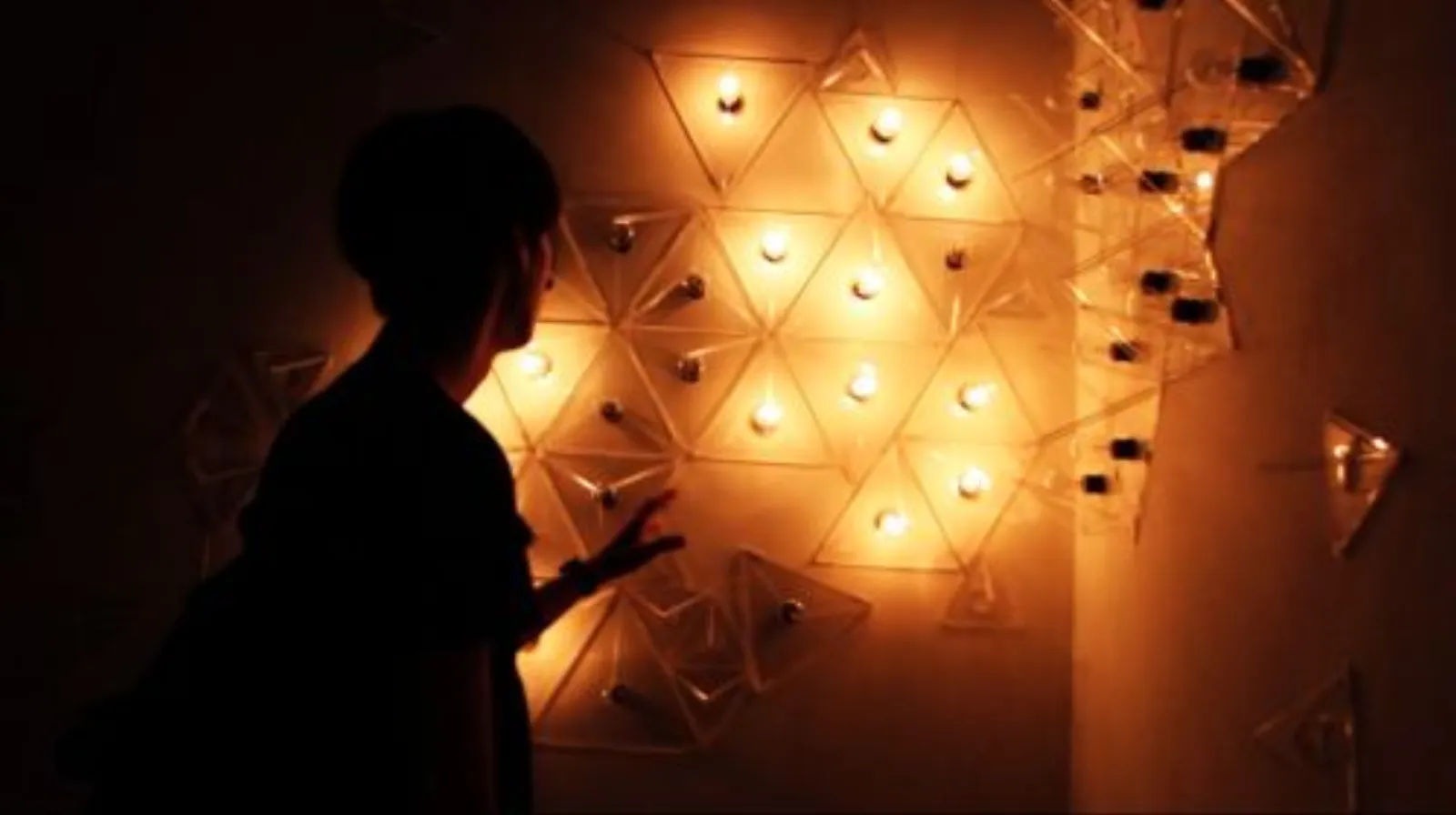
The work explores what happens when light is treated as a conscious entity, endowed with distinct behaviors. As light roams through darkness, it resembles an electronic signal groping for its own awareness. When the viewer — a conscious being — steps before the light, the interplay between the two casts a silhouette that mirrors the loneliness within. Yet light carries warmth and hope, seeping slowly into the body, replicating our form — as if, amid the noise of electronic interference, it has captured a soul and a consciousness. This is a dialogue between light and human, or perhaps a monologue of consciousness itself.
Exhibitions
2023 Tainan Next Art Award, Zuei-Mei Gallery, Tainan
2015 404 Festival "WE ARE SPAM", ECU, Rosario, Argentina
2015 EYEBONBON VJ;ING, Neo Studio, Taipei
2015 "Motion • Emotion" Digital Art Exhibition, Fuzhong 15, New Taipei City
2015 Danei Art Festival, Tina Keng Gallery, Taipei
2014 "Human vs. User" 404 Electronic Art Festival, Platforma, Moscow
2014 "Insects, Sounds and Phantasms" Exhibition, National Taiwan Science Education Center, Taipei
2014 Taipei Digital Art Festival, Songshan Cultural & Creative Park, Taipei
Gallery
Video
Behind the Scenes
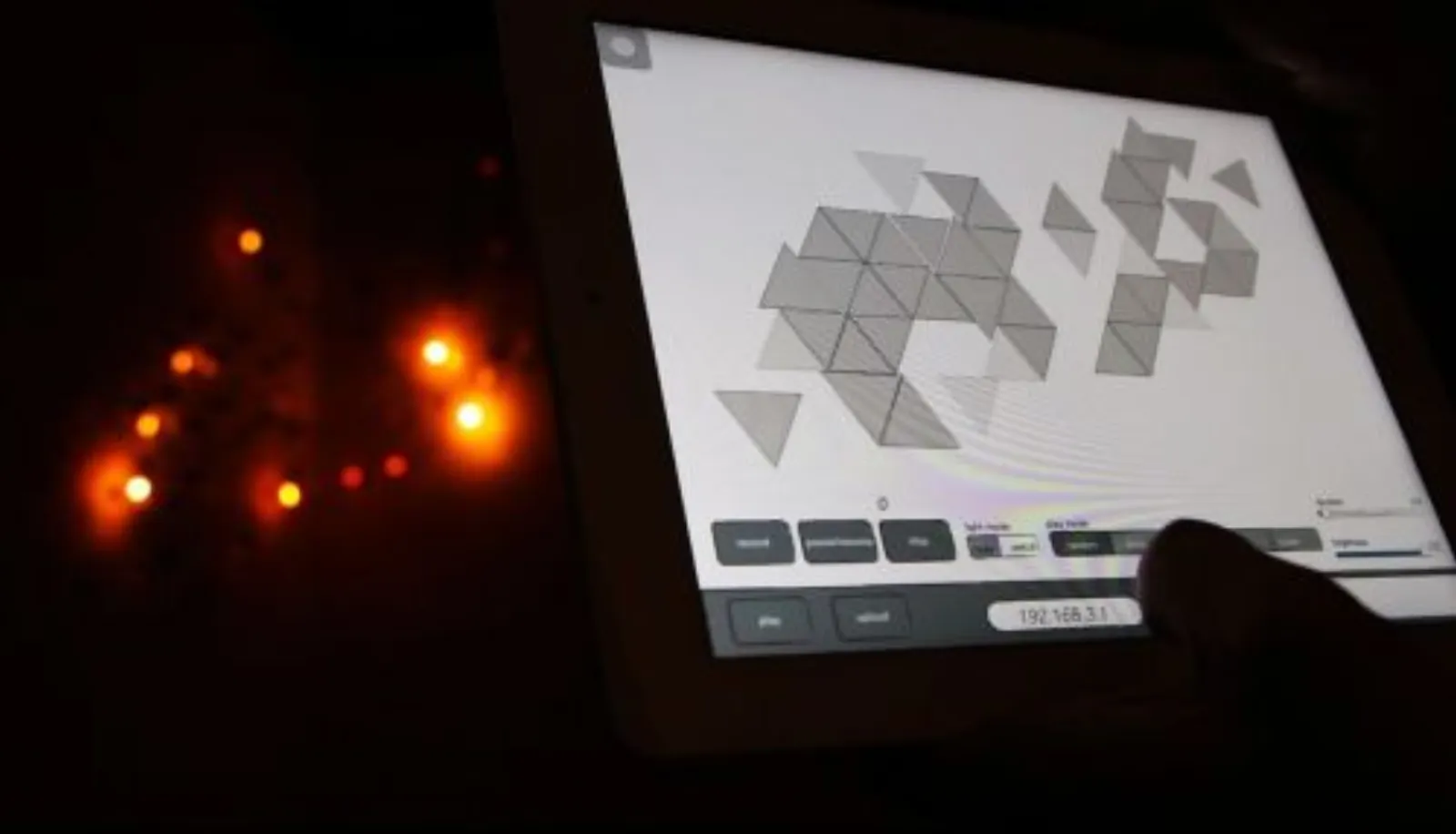
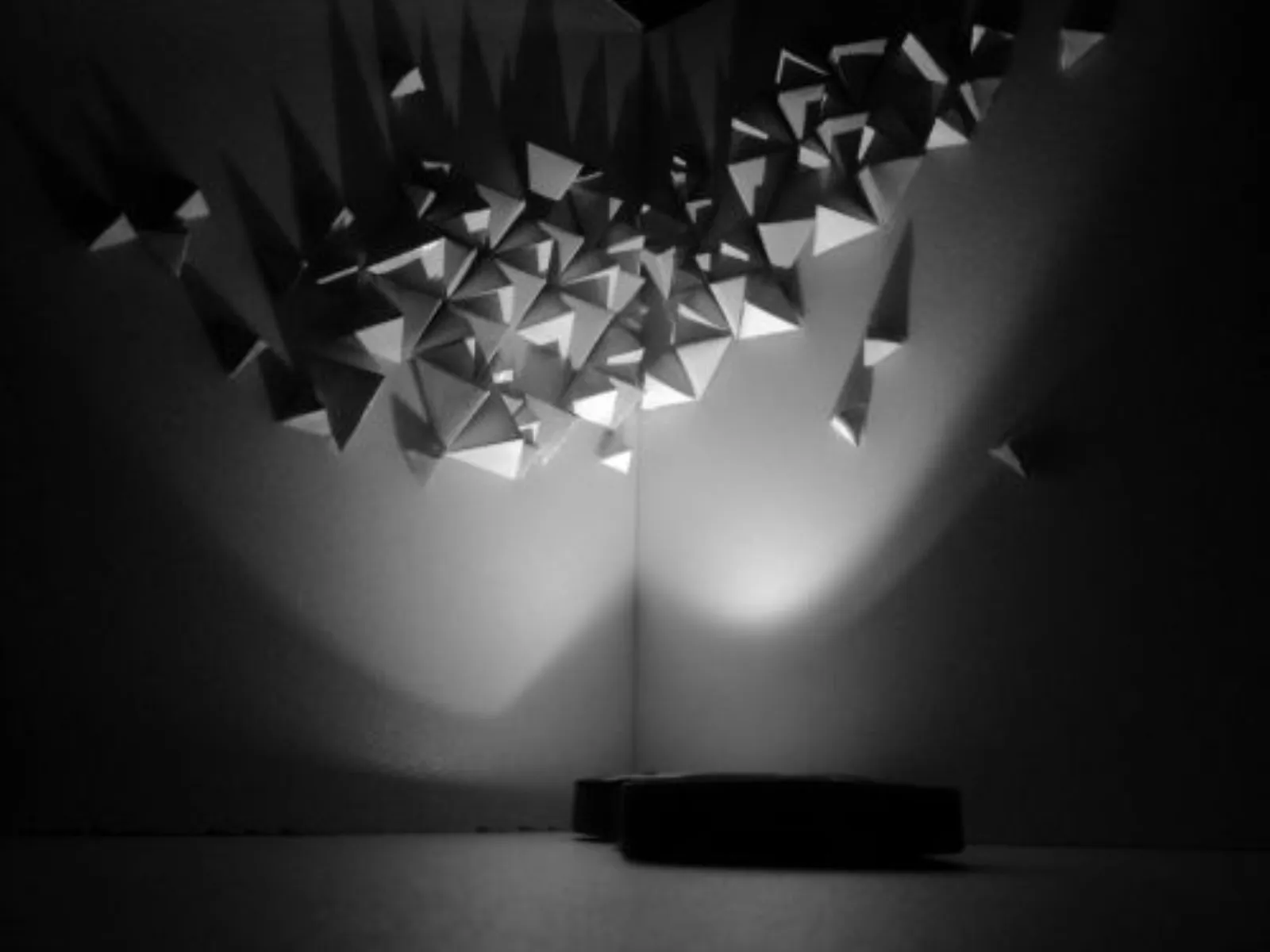
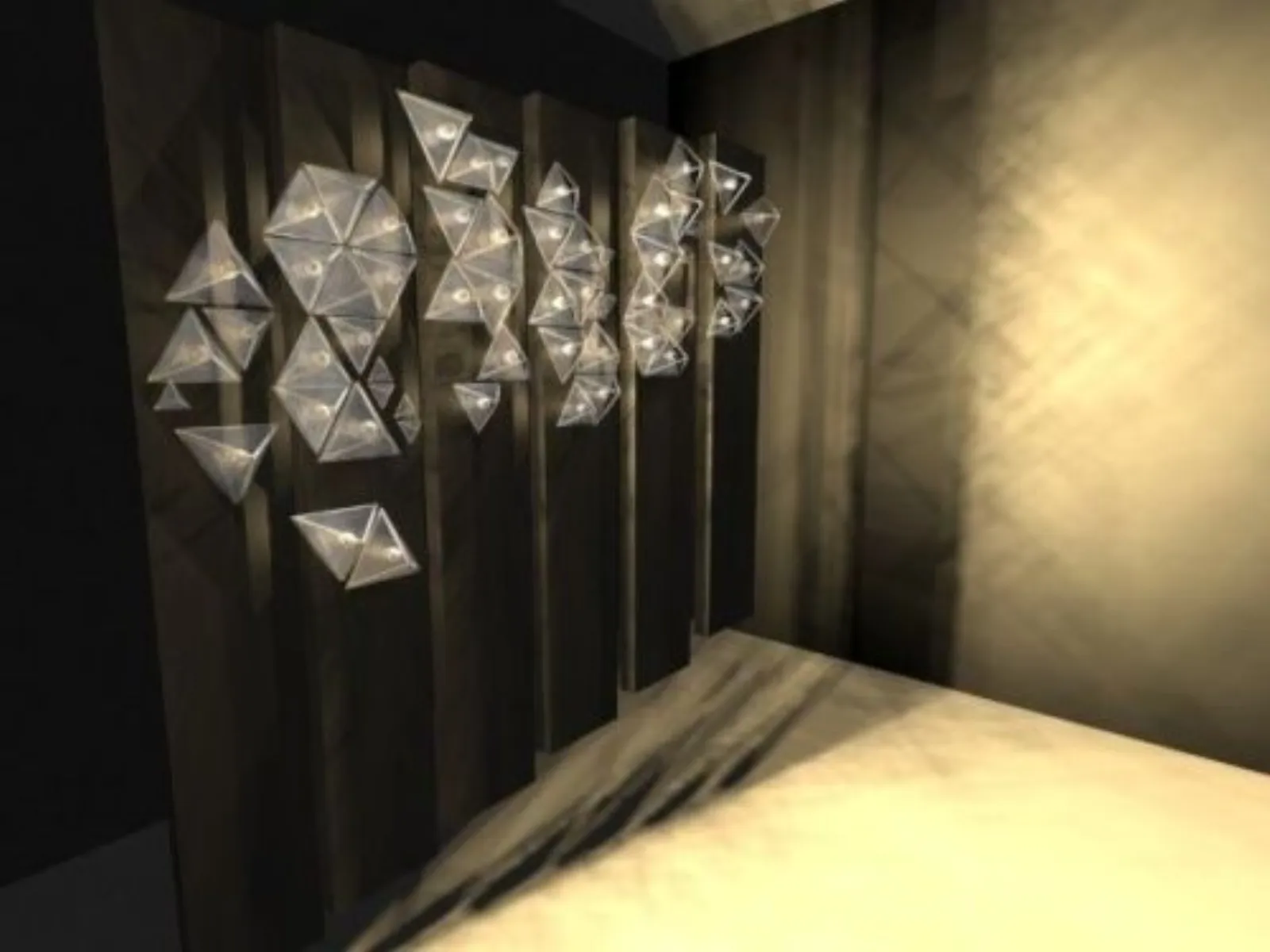
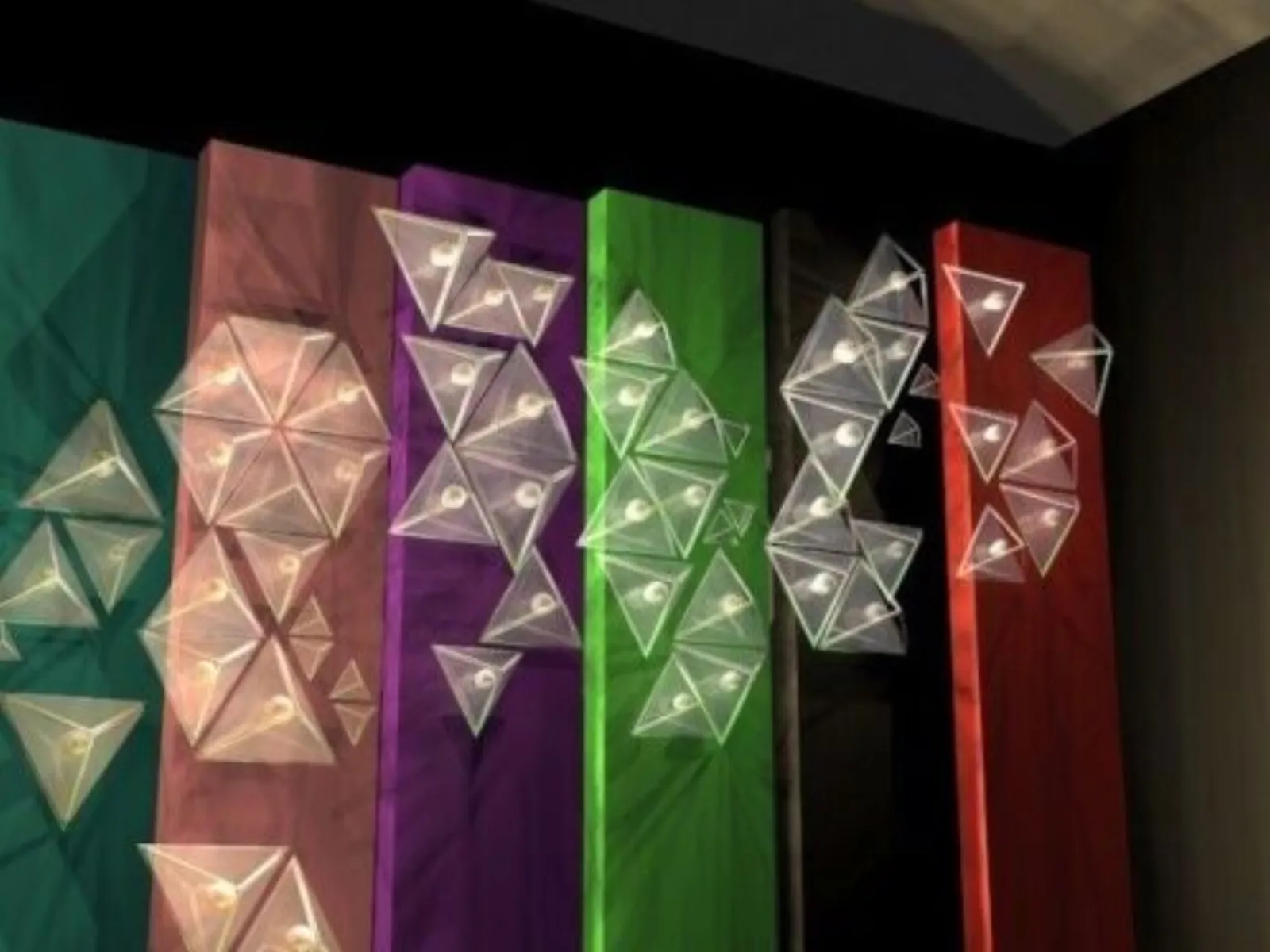
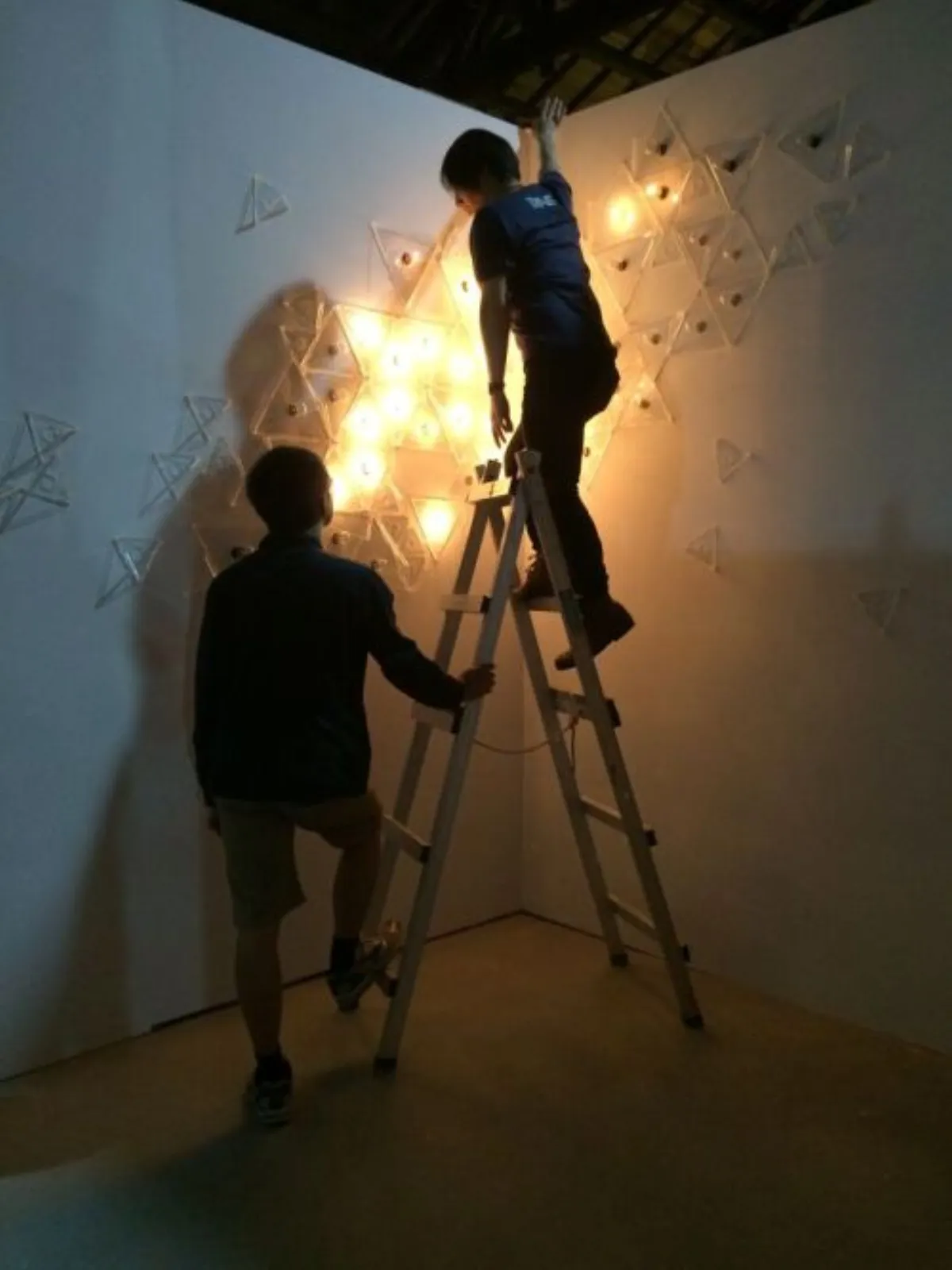
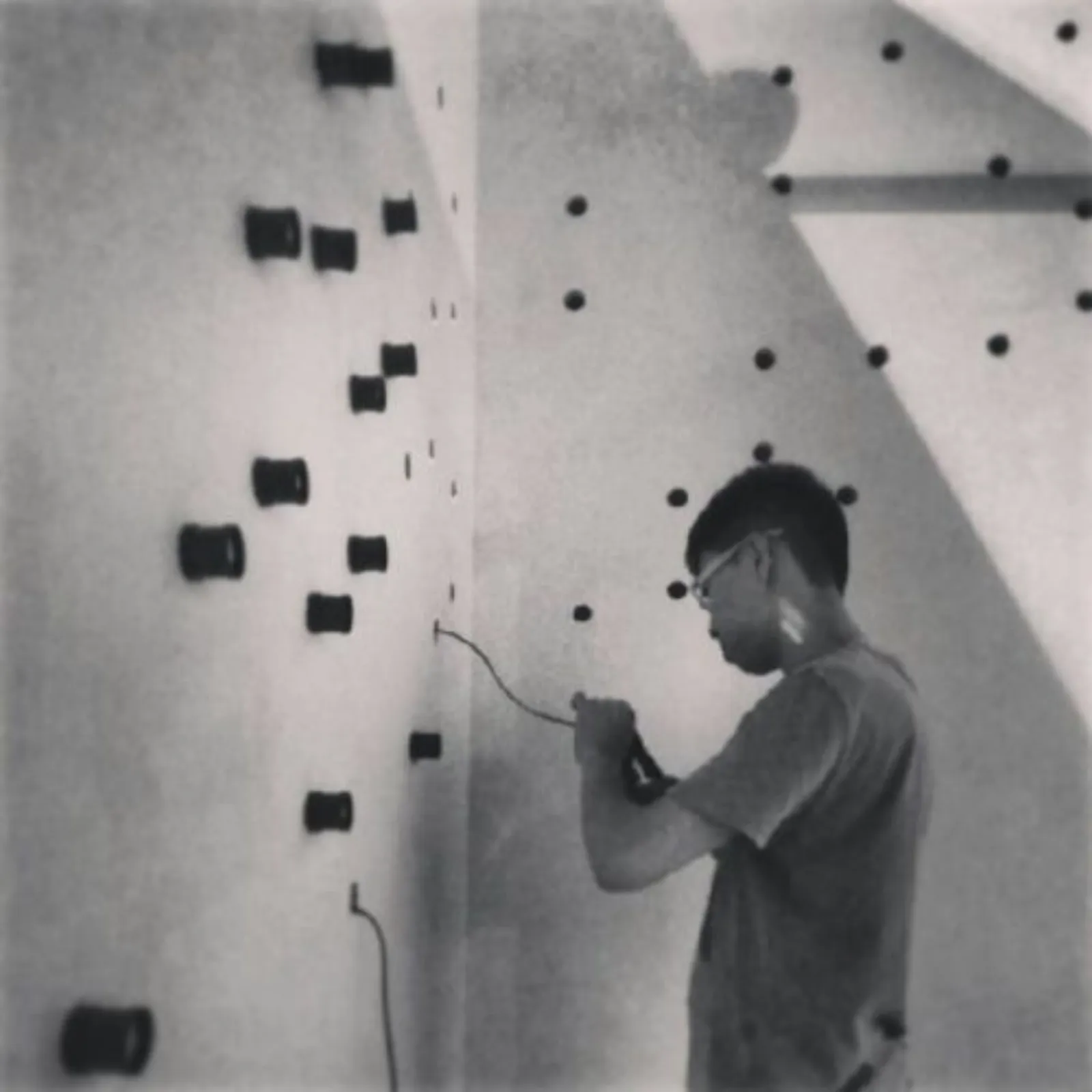
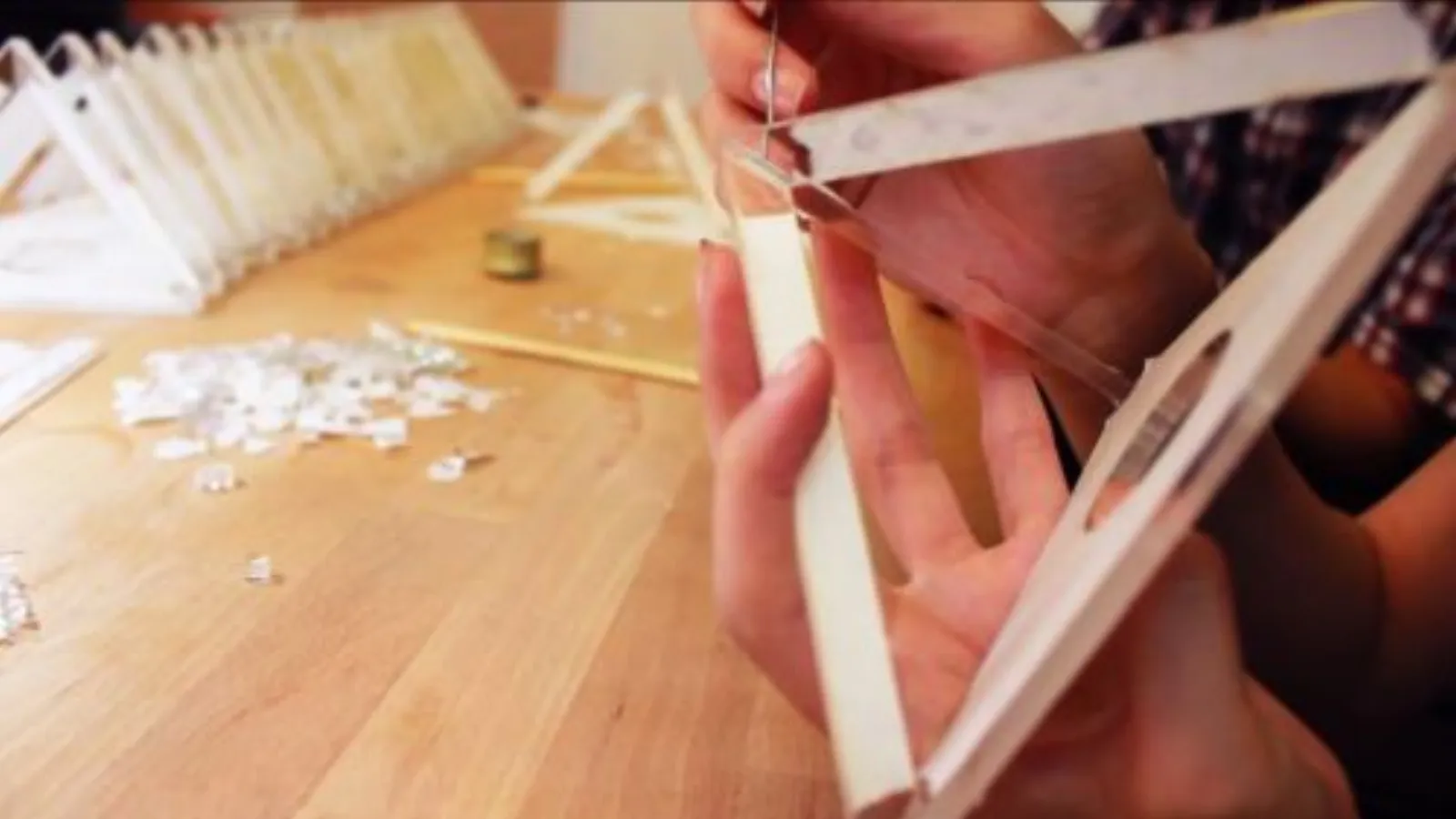
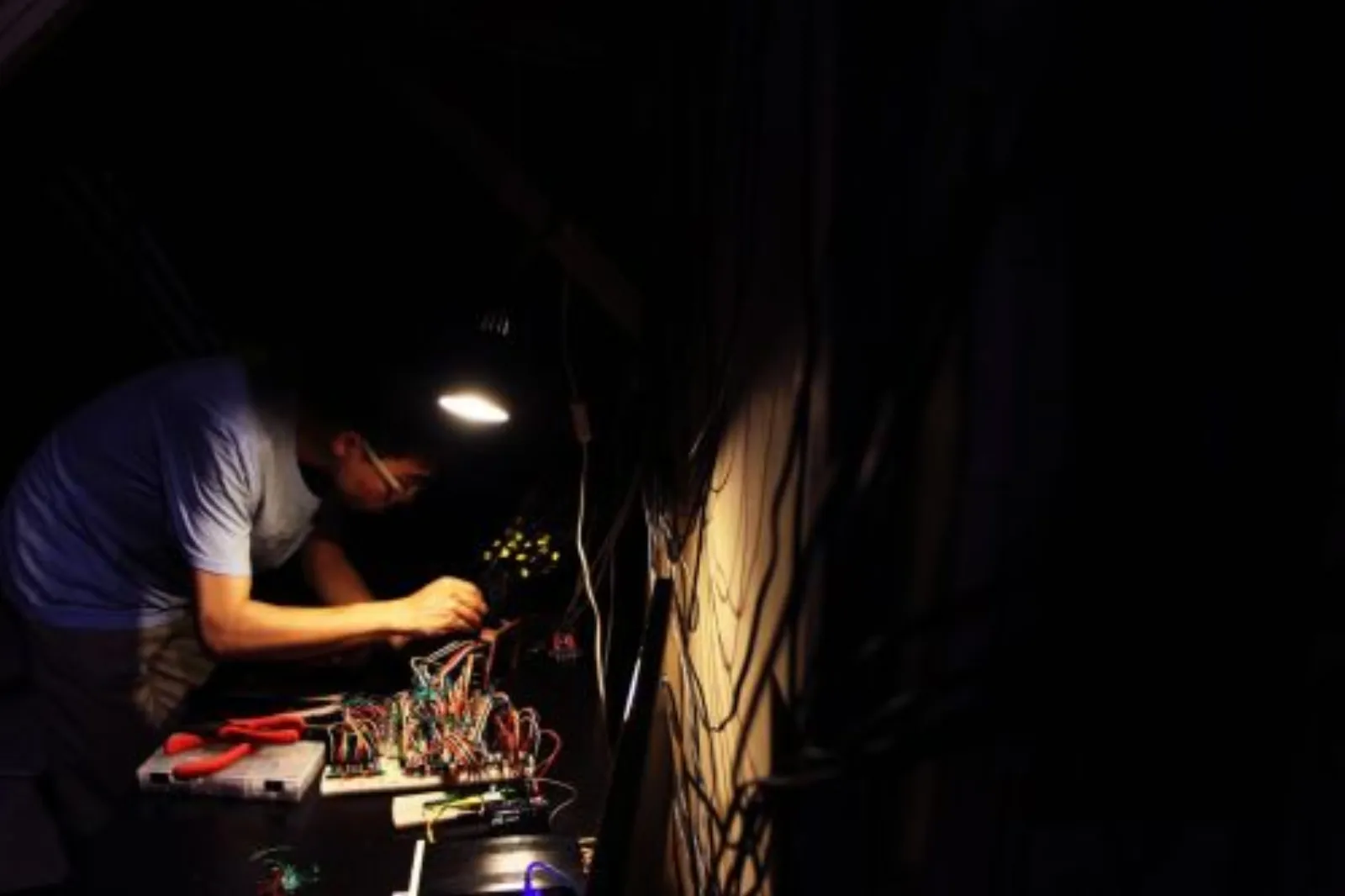
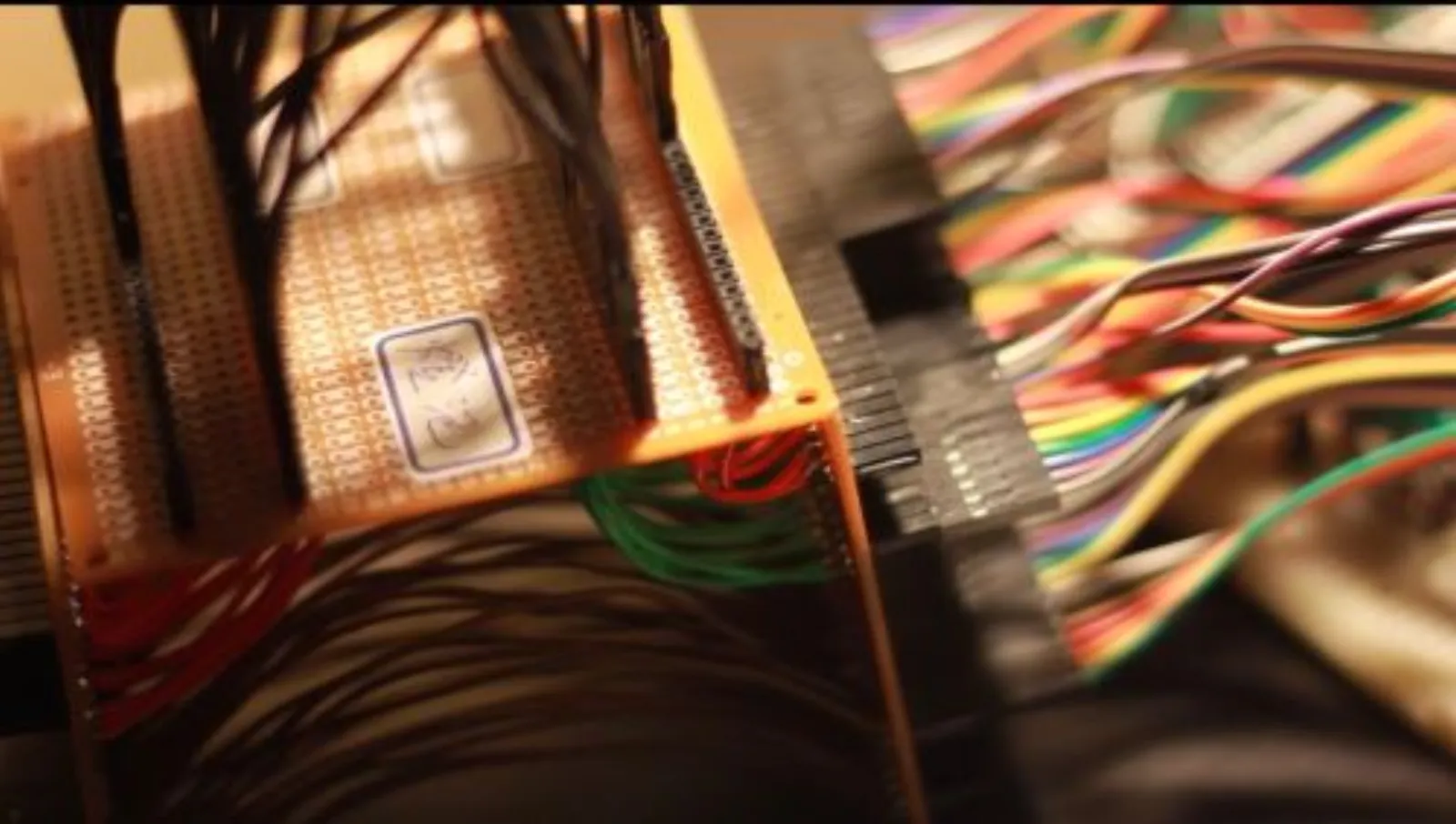
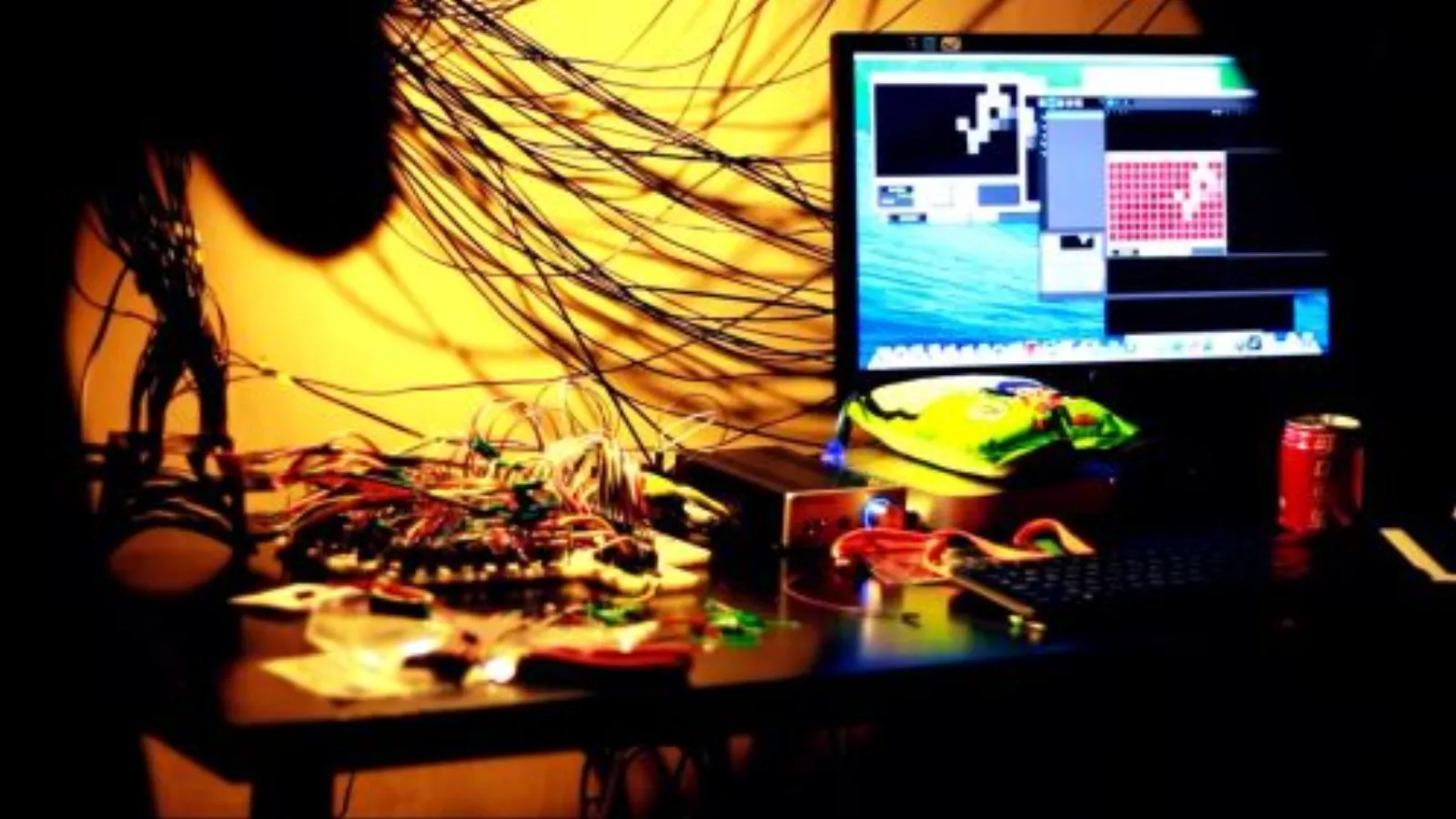
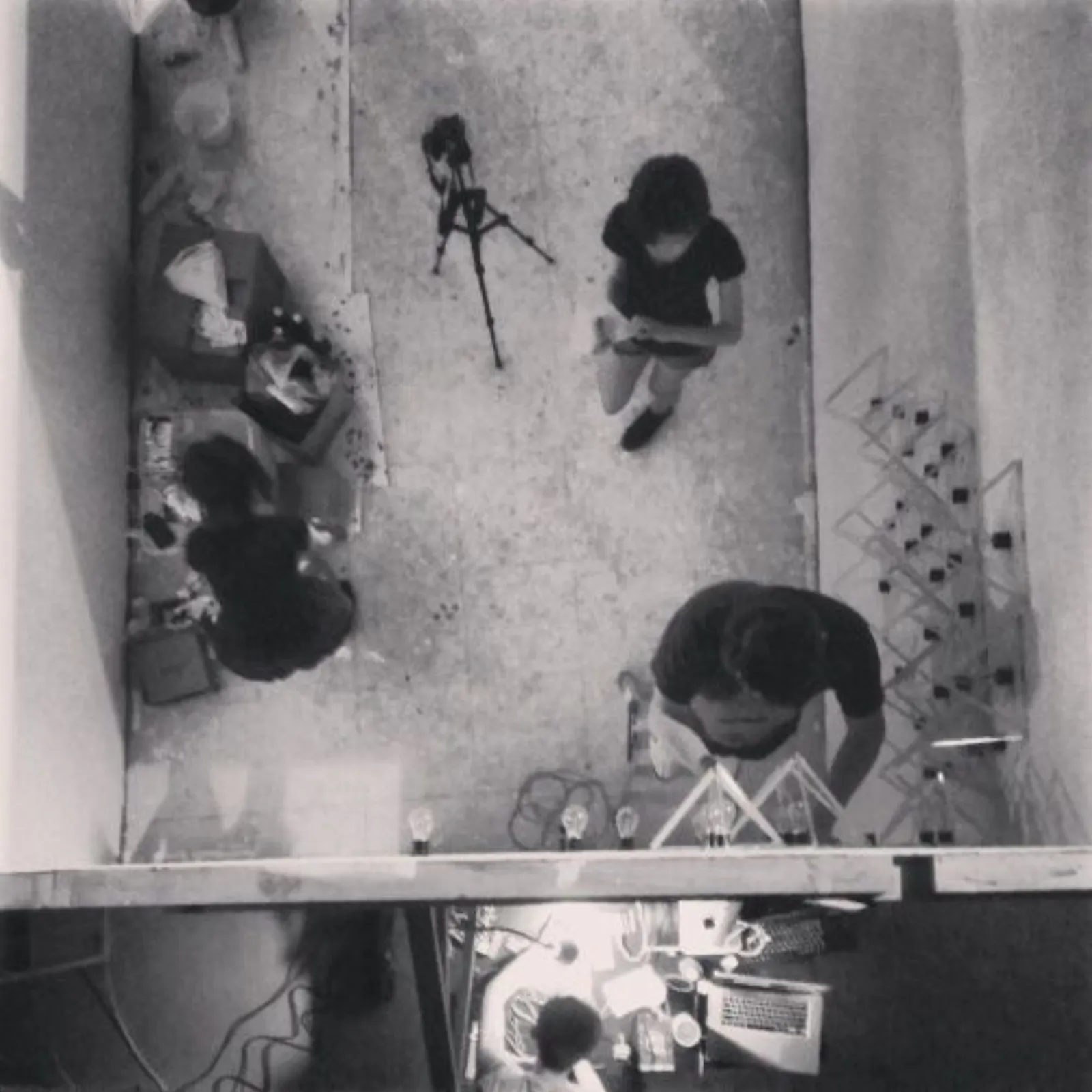
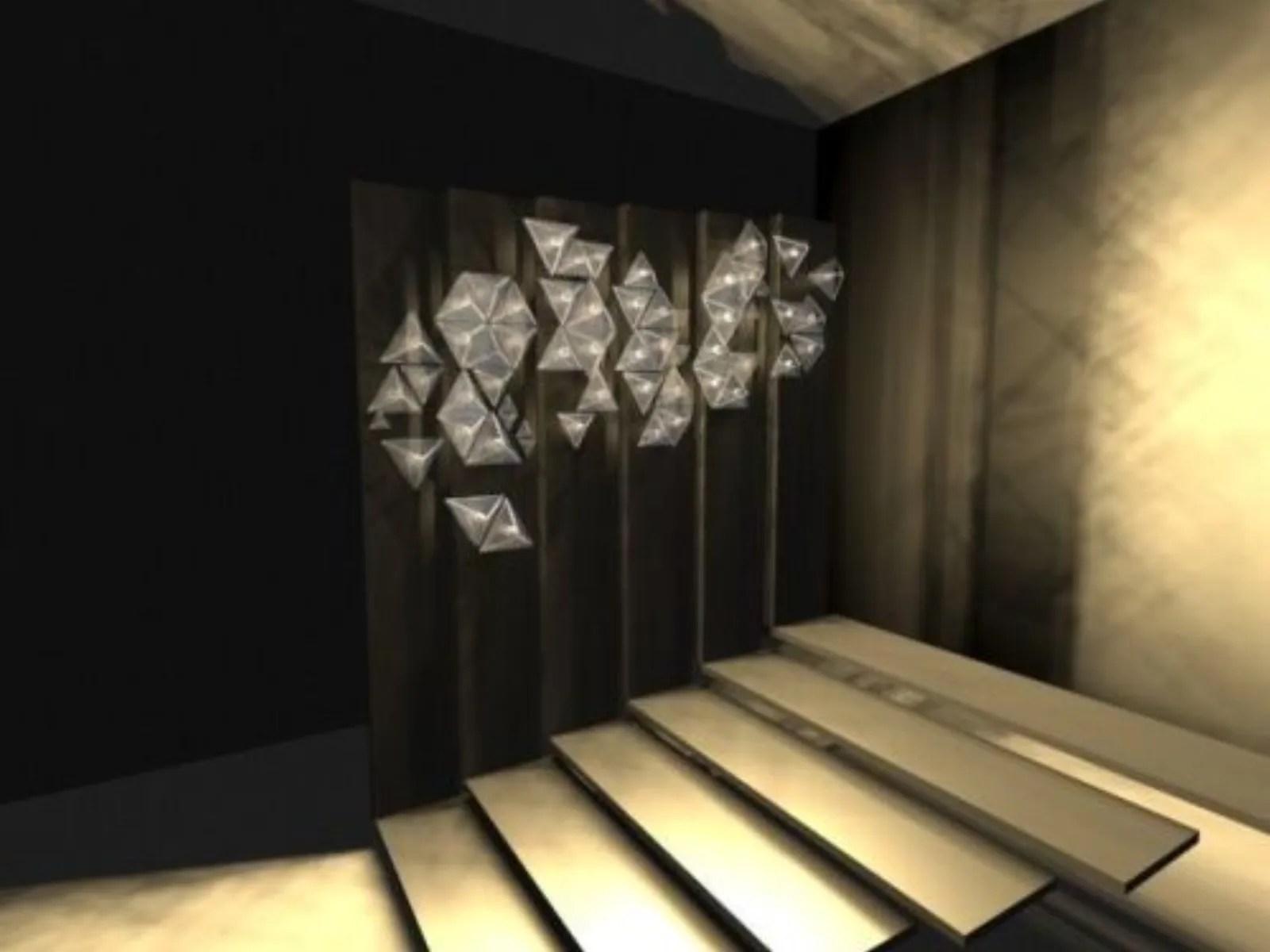
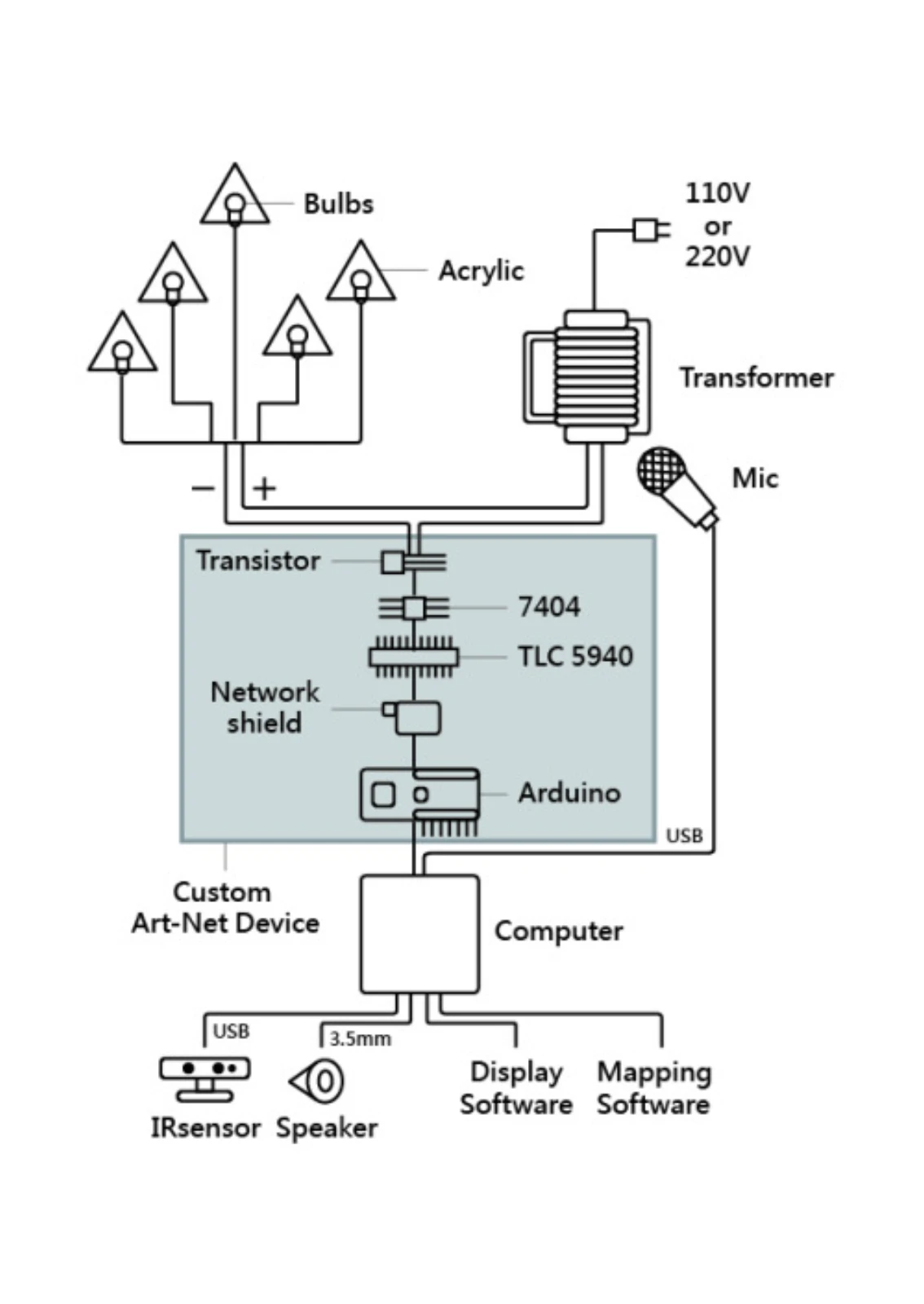
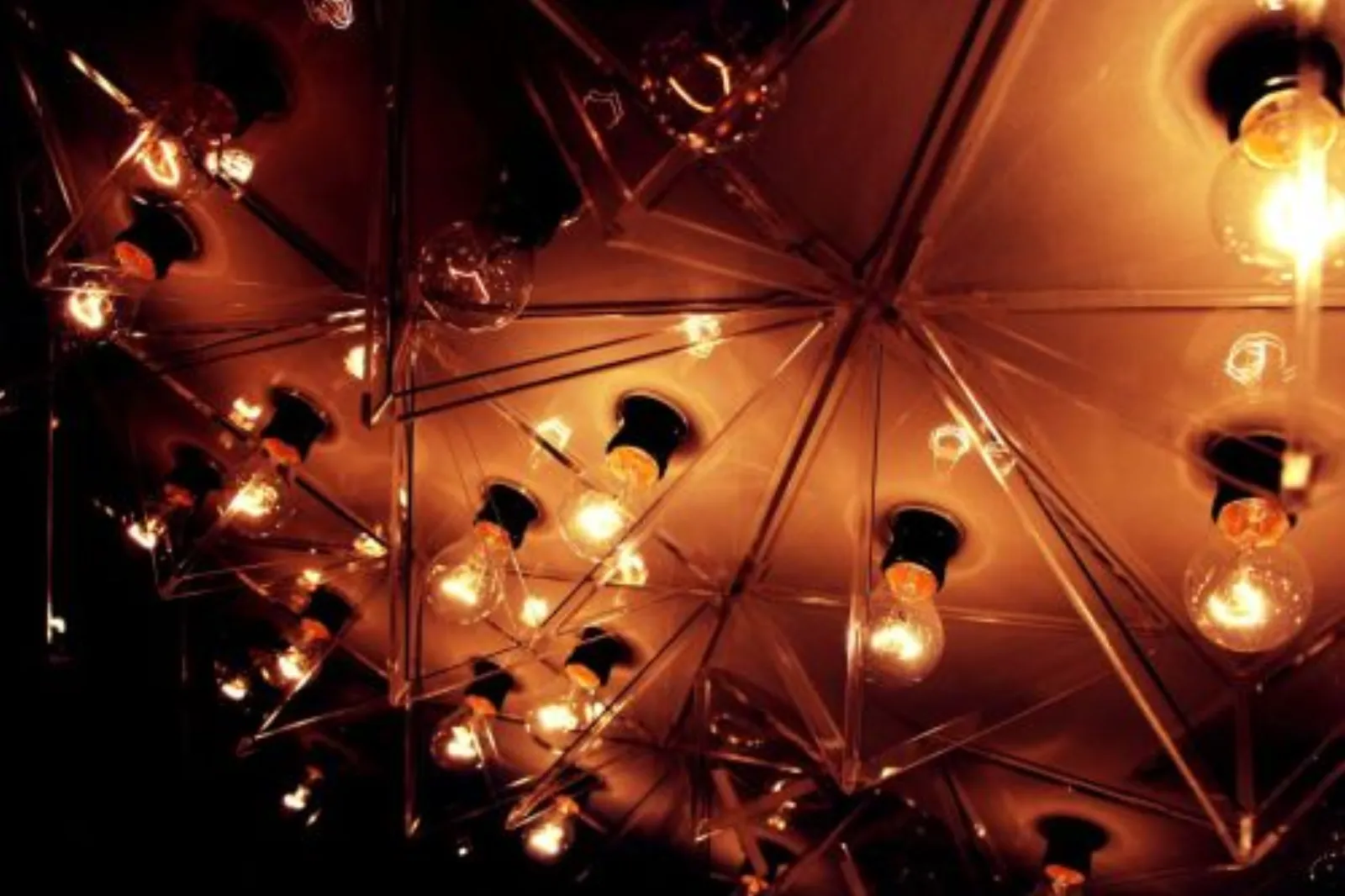
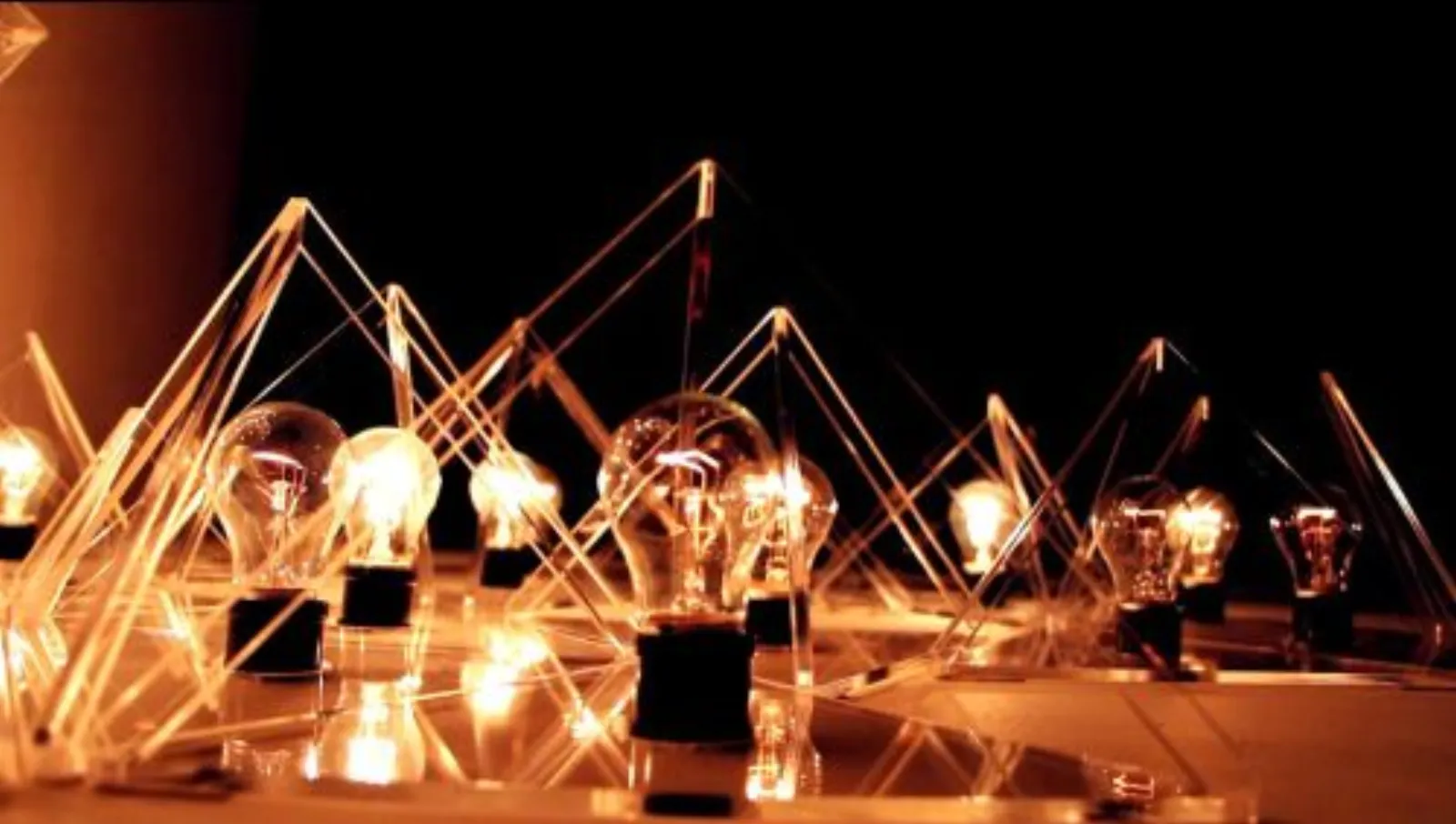
Each triangular module was hand-assembled from acrylic sheets and tungsten filament bulbs, with custom Arduino-controlled circuits driving the light intensity via network data. The team built a custom Art-Net device to bridge internet data streams to the physical installation, mapping real-time online activity onto the warmth and brightness of each bulb.
Different exhibition contexts demanded different spatial configurations — from wall-mounted grids to suspended ceiling clusters and colorful fabric-backed panels — each requiring on-site rewiring and recalibration of the sensor-light feedback loop.